 Datasheet
 2mm Flat Top Cylindrical Bi-Color LED Diode (3-Pin) – Compact Dual-Color Indicator for Precision Electronics
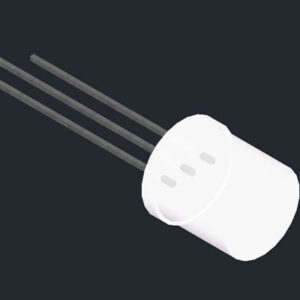
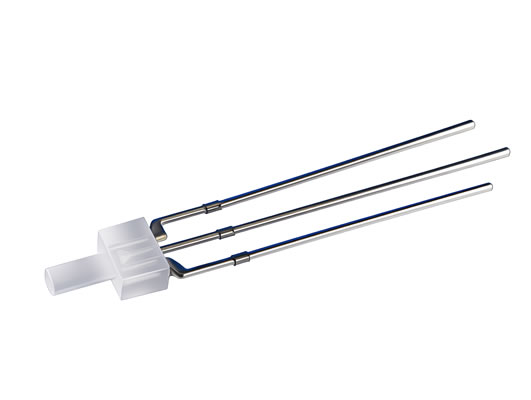
The 2mm flat top cylindrical bi-color LED diode (3 pin) is engineered for compact electronic devices that require accurate multi-status indication in minimal space. Designed with a flat-top cylindrical lens, it delivers uniform, wide-angle illumination and excellent readability even when viewed from the side.
This component integrates two colors in one LED package, offering a versatile signal solution for advanced electronics, instrumentation panels, and compact consumer products. With a 3-pin configuration—two independent LED chips and one common lead (anode or cathode)—it supports flexible control and compatibility with low-voltage digital circuits, microcontrollers, and IC-based systems.
Its small size, efficient optical output, and robust construction make it a preferred LED for engineers, product designers, and OEM manufacturers requiring reliable, space-saving dual-color indication.
Key Features
1. Flat-Top Cylindrical Lens for Enhanced Visibility
Unlike round-lens LEDs, the flat-top design:
-
Produces a uniform, evenly distributed light
-
Enhances surface-mount alignment and indicator panel clarity
-
Offers a wider viewing angle for improved readability
This is ideal for dashboard graphs, control panels, and compact electronic displays.
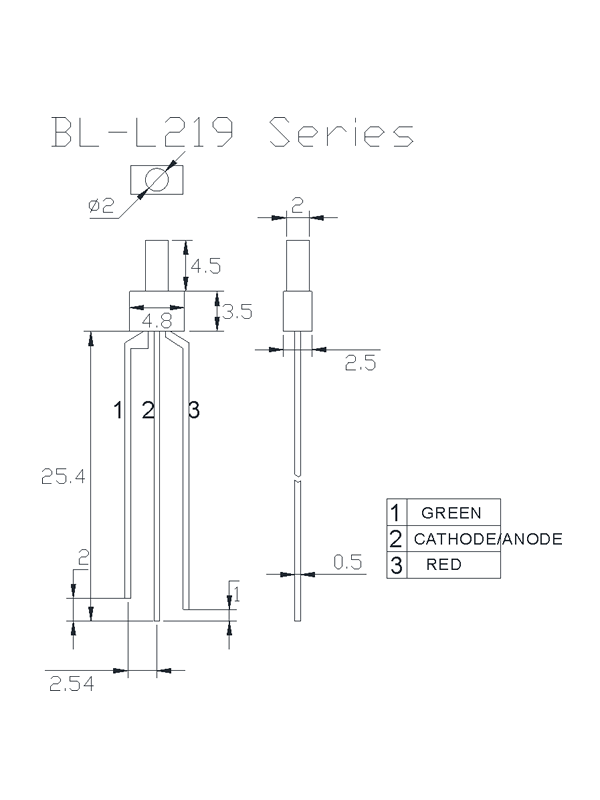
2. Bi-Color Output with 3-Pin Configuration
The diode includes:
-
Lead 1: Color A
-
Lead 2: Color B
-
Common lead: shared cathode or anode
This provides:
-
Independent color control
-
Smooth color switching or blending
-
Minimal wiring complexity
The dual-color capability allows one LED to communicate multiple statuses, minimizing PCB component count.
3. Low Current / IC Compatibility
Engineered for low-power systems:
-
Operates effectively at low current
-
Compatible with microcontroller GPIO pins
-
Generates minimal heat
-
Suitable for battery-driven or portable devices
This makes it ideal for IoT devices, wearables, and compact consumer electronics.
4. Multiple Viewing Angle Options
Available with various beam angles, allowing designers to select:
-
Narrow light beams for focused indicators
-
Wide beams for panel illumination
-
Mid-range illumination for mixed applications
5. Lens Options for Visual Performance
Choose from:
-
Diffused lens for soft, even light distribution
-
Transparent lens for bright, direct light
-
Water-clear lens for maximum brightness and sharp contrast
This ensures optimal visibility regardless of environment.
6. Environmentally Friendly & RoHS-Compliant
The LED follows RoHS safety standards:
-
No hazardous materials
-
Safe for global consumer and industrial markets
-
Compliant with international manufacturing requirements

Applications
1. Electronic Indicator Lights
Perfect for dual-state or multi-state signaling in:
-
Control panels
-
Test instruments
-
Power supplies
-
Circuit indicators
The bi-color capability reduces space requirements while enhancing clarity.
2. Consumer Electronics
Widely used in:
-
Remote controls
-
Chargers
-
Smart gadgets
-
Audio devices
-
IoT modules
Its small size and flat top make it ideal for slim designs.
3. Automotive and Transportation
Used for:
-
Dashboard status indicators
-
Backlit buttons
-
Various signaling icons
Bi-color output supports multi-condition alerts in a single LED.
4. Industrial Equipment
Ideal for:
-
Factory automation panels
-
Diagnostic instruments
-
Monitoring systems
The robust cylindrical body withstands industrial environments.
5. Safety & Warning Systems
Suitable for:
-
Emergency indicator circuits
-
Alert systems
-
Warning icons
Dual-color output provides intuitive visual communication.
6. Educational & DIY Electronics
Popular in:
-
Prototyping
-
Arduino and Raspberry Pi projects
-
STEM kits
The 3-pin bi-color design helps learners understand LED polarity and signal control.
7. Decorative & Creative Uses
Used in:
-
Small displays
-
LED pixel effects
-
Light-based crafts
The flat top ensures smooth lighting transitions for artistic applications.
Benefits
-
Space-saving dual-color functionality
-
High brightness in a compact 2mm format
-
Flexible electrical configuration (common anode/cathode)
-
Wide viewing angle with flat-top optics
-
Low power consumption with long service life
-
Consistent and stable illumination performance
Case Study
A wearable device manufacturer integrated the 2mm flat-top bi-color LED into a compact health monitoring device. The LED served as a two-status indicator—green for normal operation and red for alert notifications. Its small footprint and low power consumption allowed seamless integration without increasing device thickness or battery load. This reduced overall BOM (Bill of Materials) cost by 18% by eliminating the need for multiple LEDs.
User Testimonial
“The 2mm flat-top bi-color LED helped us redesign our control interface significantly. Its brightness, compact size, and dual-color simplicity allowed us to reduce our panel indicator count and improve clarity for end-users.”
— Electronics Design Engineer, Industrial Automation Sector
Conclusion
The 2mm flat top cylindrical bi-color LED diode (3 pin) is a high-efficiency, compact, and versatile component that meets the modern requirements of electronics manufacturing and product innovation. Delivering excellent brightness, two-color indication, a flexible viewing angle, and durable construction, it is ideal for everything from consumer devices to industrial systems.
Manufacturers seeking a reliable, space-efficient indicator solution will find this LED to be a standout choice for long-term performance and design flexibility.


Obtain 3D specification files
 Initial Graphics Exchange Specification (.IGS)Standard for the Exchange of Product Model Data (.STEP)
To examine all 3D specifications, save the files to your local drive and open them with your 3D application.
Lens colors in 3D files are solely for visual representation; consult the Datasheet for accurate lens type and color information.
In the event of a mismatch, the dimensions in the datasheet take precedence over the 3D specifications.
LEDs, Light Emitting diodes, which include various small kinds, such as 3mm, 5mm, 8mm, 10mm; round type, rectangular type square type, tower type, Oval led, elliptical, flat top; SMDs, high power led, piranha LEDs

Applied for:



The LEDs described here are intended to be used for ordinary electronic equipment (such as office equipment,
communication equipment and household applications). Consult Betlux’s Sales in advance for information on
applications in which exceptional reliability is required, particularly when the failure or malfunction of the LEDs
may directly jeopardize life or health (such as in aviation, transportation, traffic control equipment, medical
and life support systems and safety devices).
CAUTIONS for Through-Hole LED Lamps
1. Application
The LEDs described here are intended to be used for ordinary electronic equipment (such as office equipment, communication equipment and household applications). Consult Betlux’s Sales in advance for information on applications in which exceptional reliability is required, particularly when the failure or malfunction of the LEDs may directly jeopardize life or health (such as in aviation, transportation, traffic control equipment, medical and life support systems and safety devices).
2. Storage
The storage ambient for the LEDs should not exceed 30℃ temperature or 70% relative humidity. It is
recommended that LEDs out of their original packaging are used within three months
For extended storage out of their original packaging, it is recommended that the LEDs be stored in a sealed
container with appropriate desiccant or in a desiccator with nitrogen ambient.
3. Cleaning
Use alcohol-based cleaning solvents such as isopropyl alcohol to clean the LED if necessary
4. Lead Forming & Assembly
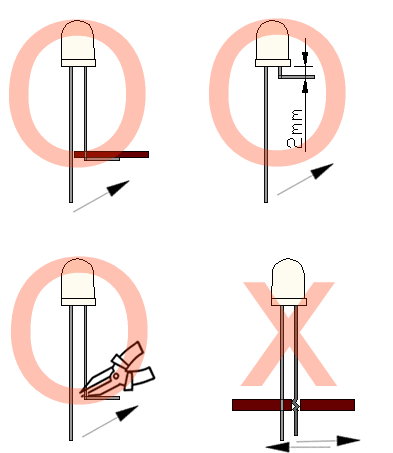
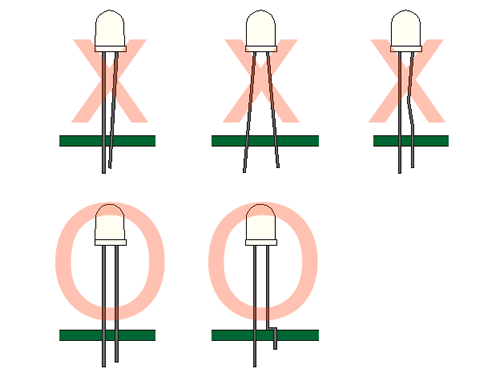
During lead forming, the leads should be bent at a point at least 3mm from the base of LED lens. Do not use
the base of the leadframe as a fulcrum during forming.
Lead forming must be done before soldering, at normal temperature.
During assembly on PCB, use minimum clinch force possible to avoid excessive mechanical stress.
ESD(Electrostatic Discharge)
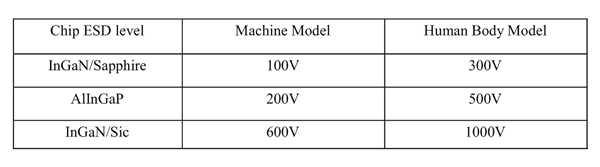
Static Electricity or power surge will damage the LED.
Suggestions to prevent ESD (Electrostatic Discharge):
n Use a conductive wrist band or anti-electrostatic glove when handling these LEDs
n All devices, equipment, and machinery must be properly grounded
n Work tables, storage racks, etc. should be properly grounded
n Use ion blower to neutralize the static charge which might have built up on surface of the LED’s
plastic lens as a result of friction between LEDs during storage and handling
ESD-damaged LEDs will exhibit abnormal characteristics such as high reverse leakage current,
low forward voltage, or “no light on” at low currents. To verify for ESD damage, check for “light on”
and Vf of the suspect LEDs at low currents.
The Vf of “good” LEDs should be>2.0V@0.1mA for InGaN product and >1.4V@0.1mA for AlInGaP
product.
Drive Method
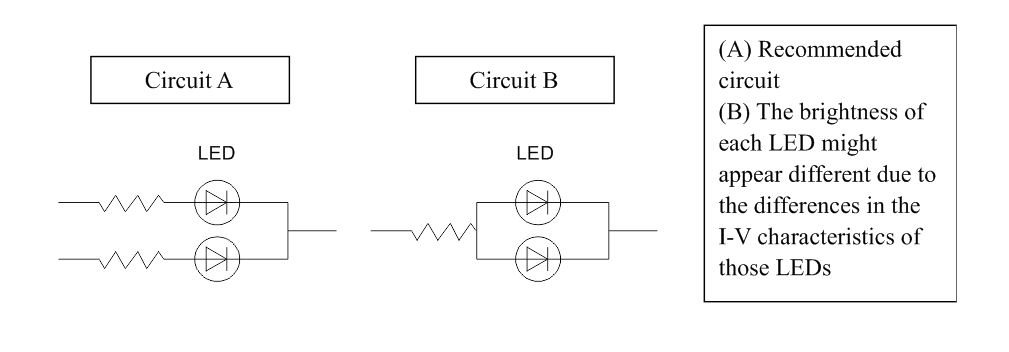
An LED is a current-operated device. In order to ensure intensity uniformity on multiple LEDs connected in
parallel in an application, it is recommended that a current limiting resistor be incorporated in the drive circuit,
in series with each LED as shown in Circuit A below.