 Datasheet
 21mm Height Lens LED – High-Intensity 5mm LED Diode
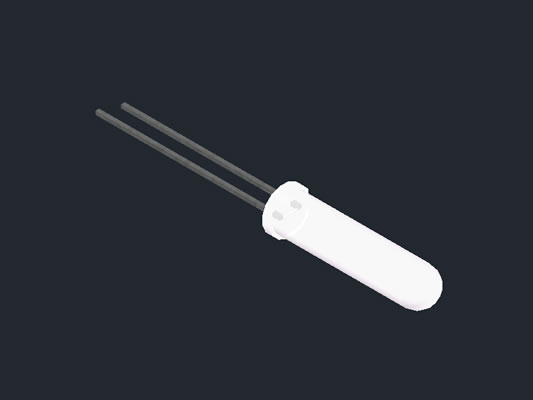
The 21mm height lens LED is an extended-lens variant of the standard 5mm LED diode, engineered to deliver exceptional brightness, long-distance visibility, and precise light focusing. With its elongated 21 mm optical lens, this LED achieves a narrow beam angle and increased luminous intensity, making it ideal for applications where clarity at distance is critical.
Built using high-quality epoxy resin, premium LED chips, and precision-formed leads, this long-lens 5mm LED diode offers durability, stable performance, and compatibility with a wide range of electronic and industrial systems.
Key Features
✔ Extra-Long 21mm Optical Lens
-
Focused light output suitable for long-range signaling
-
Enhanced brightness concentration
-
Superior visibility even in bright or outdoor environments
✔ Standard 5mm LED Package
-
Easy integration into existing 5mm LED housings and indicator modules
-
Compatible with standard mounting holes and PCB spacing
✔ Multiple Lens & Color Options
-
Water clear, transparent, and diffused lens
-
Single-color options: Red, Green, Blue, Yellow, White, Orange
-
Custom wavelengths available based on project needs
✔ High Brightness & Low Power Consumption
-
Energy-efficient LED chip
-
Excellent luminous intensity thanks to the extended lens design
-
Suitable for battery-powered equipment
✔ Long-Life LED Chip
-
Stable optical output over long operating periods
-
Heat-resistant epoxy package for reliability
✔ RoHS-Compliant Construction
-
Halogen-free
-
Environment-friendly components
-
Meets global electronic compliance standards

Applications
The 21mm height lens 5mm LED diode is designed for long-distance visibility and precision signaling, making it ideal for:
⚙ Industrial & Instrumentation
-
Long-distance panel indicators
-
Remote visibility signal lamps
-
Machine status indication
-
Control systems
🚗 Automotive & Transportation
-
Dash indicators
-
Signal lamps
-
Electric scooter and e-bike indicators
📡 Communication & Networking Devices
-
Router and modem status lights
-
Telecommunication equipment indicators
🎮 Gaming & Entertainment Devices
-
Arcade machines
-
Gaming consoles and control interfaces
-
LED effect lighting in entertainment hardware
🏠 Consumer Electronics
-
Home appliances
-
Smart home indicator lights
-
Battery-powered gadgets
🔧 Hobby, DIY & Educational Projects
-
Robotics
-
Breadboard and prototyping
-
Model making and decorative signaling
🔆 Flashlights & Long-Distance Lighting Modules
-
Compact flashlight heads
-
Emergency beacons
-
Optical pointer devices
Benefits & Advantages
1. Long-Distance Visibility
The 21mm lens boosts focus and brightness, allowing the LED to be seen from farther distances than standard 5mm types.
2. Improved Optical Efficiency
Extended lens reduces light loss and delivers a sharp, narrow beam.
3. Versatile Mounting
Fits standard 5mm mounting holes and PCB footprints—easy upgrade from ordinary round LEDs.
4. Wide Compatibility
Suitable for analog or digital circuits, IC-driven systems, and low-current applications.
5. Cost-Effective Performance
Delivers high brightness with minimal energy consumption, ideal for continuous-use indicators.
User Testimonials (Examples)
“These 21mm long-lens LEDs gave our control panel the visibility we needed. Operators can now see status indicators across the factory floor.”
— Industrial Automation Engineer, USA
“Used them in our arcade project—excellent brightness and clean, focused beam.”
— Gaming Equipment Builder, UK
“Perfect for my robotics students. Easy to mount and very bright even in daylight.”
— STEM Instructor, Canada
Conclusion
The 21mm height lens 5mm LED diode is the perfect upgrade when long-distance visibility, bright output, and precision signaling are required. Its extended optical lens, strong luminous intensity, reliability, and low-power performance make it suitable for industrial, consumer, gaming, automotive, and DIY projects alike.
If you need custom wavelengths, brightness levels, or pre-wired LED assemblies, feel free to request specifications.


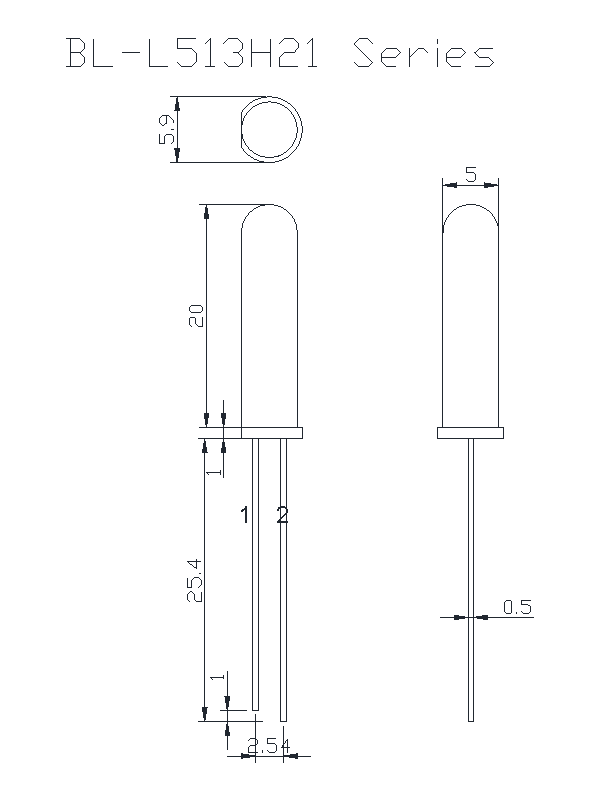
Obtain 3D specification files
 Initial Graphics Exchange Specification (.IGS)Standard for the Exchange of Product Model Data (.STEP)
To examine all 3D specifications, save the files to your local drive and open them with your 3D application.
Lens colors in 3D files are solely for visual representation; consult the Datasheet for accurate lens type and color information.
In the event of a mismatch, the dimensions in the datasheet take precedence over the 3D specifications.
LEDs, Light Emitting diodes, which include various small kinds, such as 3mm, 5mm, 8mm, 10mm; round type, rectangular type square type, tower type, Oval led, elliptical, flat top; SMDs, high power led, piranha LEDs

Applied for:



The LEDs described here are intended to be used for ordinary electronic equipment (such as office equipment,
communication equipment and household applications). Consult Betlux’s Sales in advance for information on
applications in which exceptional reliability is required, particularly when the failure or malfunction of the LEDs
may directly jeopardize life or health (such as in aviation, transportation, traffic control equipment, medical
and life support systems and safety devices).
CAUTIONS for Through-Hole LED Lamps
1. Application
The LEDs described here are intended to be used for ordinary electronic equipment (such as office equipment, communication equipment and household applications). Consult Betlux’s Sales in advance for information on applications in which exceptional reliability is required, particularly when the failure or malfunction of the LEDs may directly jeopardize life or health (such as in aviation, transportation, traffic control equipment, medical and life support systems and safety devices).
2. Storage
The storage ambient for the LEDs should not exceed 30℃ temperature or 70% relative humidity. It is
recommended that LEDs out of their original packaging are used within three months
For extended storage out of their original packaging, it is recommended that the LEDs be stored in a sealed
container with appropriate desiccant or in a desiccator with nitrogen ambient.
3. Cleaning
Use alcohol-based cleaning solvents such as isopropyl alcohol to clean the LED if necessary
4. Lead Forming & Assembly
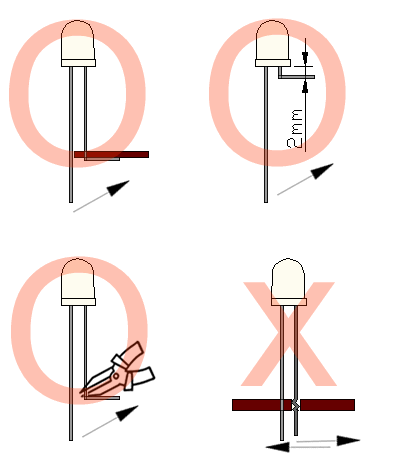
During lead forming, the leads should be bent at a point at least 3mm from the base of LED lens. Do not use
the base of the leadframe as a fulcrum during forming.
Lead forming must be done before soldering, at normal temperature.
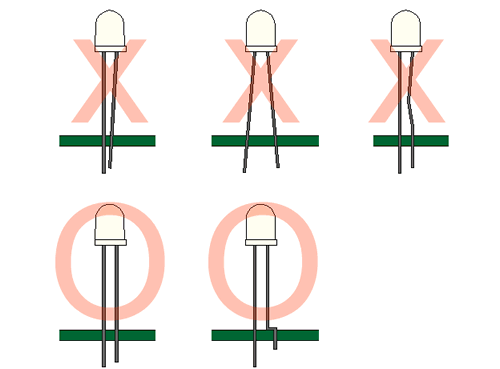
During assembly on PCB, use minimum clinch force possible to avoid excessive mechanical stress.
ESD(Electrostatic Discharge)
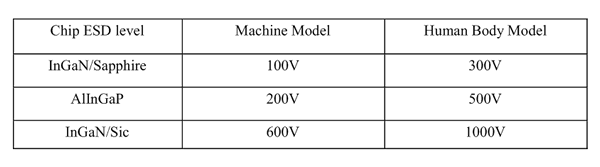
Static Electricity or power surge will damage the LED.
Suggestions to prevent ESD (Electrostatic Discharge):
n Use a conductive wrist band or anti-electrostatic glove when handling these LEDs
n All devices, equipment, and machinery must be properly grounded
n Work tables, storage racks, etc. should be properly grounded
n Use ion blower to neutralize the static charge which might have built up on surface of the LED’s
plastic lens as a result of friction between LEDs during storage and handling
ESD-damaged LEDs will exhibit abnormal characteristics such as high reverse leakage current,
low forward voltage, or “no light on” at low currents. To verify for ESD damage, check for “light on”
and Vf of the suspect LEDs at low currents.
The Vf of “good” LEDs should be>2.0V@0.1mA for InGaN product and >1.4V@0.1mA for AlInGaP
product.
Drive Method
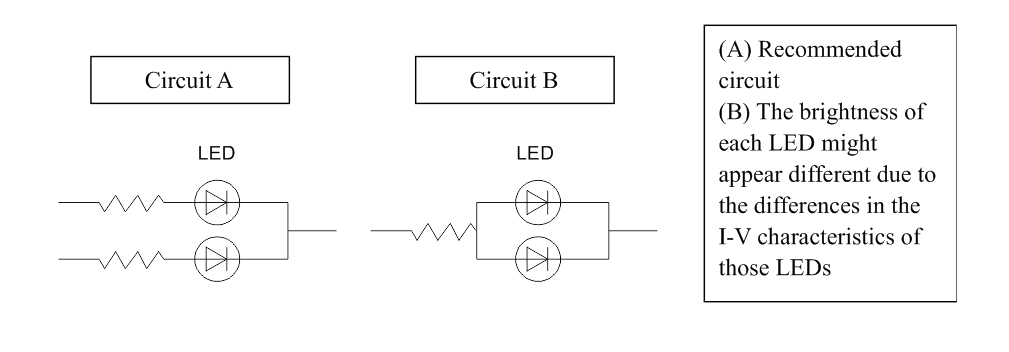
An LED is a current-operated device. In order to ensure intensity uniformity on multiple LEDs connected in
parallel in an application, it is recommended that a current limiting resistor be incorporated in the drive circuit,
in series with each LED as shown in Circuit A below.